


Six Ways to Lower Rising Health Costs for Companies
Read more

Healthcare benefits have become one of the most complex — and costly — challenges facing employers today.
Despite adding more programs, vendors, and resources, many organizations are still struggling with the same outcomes: low engagement, rising costs, and frustrated employees who don’t know where to start.
In a recent episode of the Modern People Leader podcast, Medefy CEO Matt Scovil breaks down why this problem persists — and what actually works to solve it.
From personal experience to system-level insights, the conversation highlights a critical shift: fixing healthcare isn’t about redesigning plans — it’s about changing behavior.
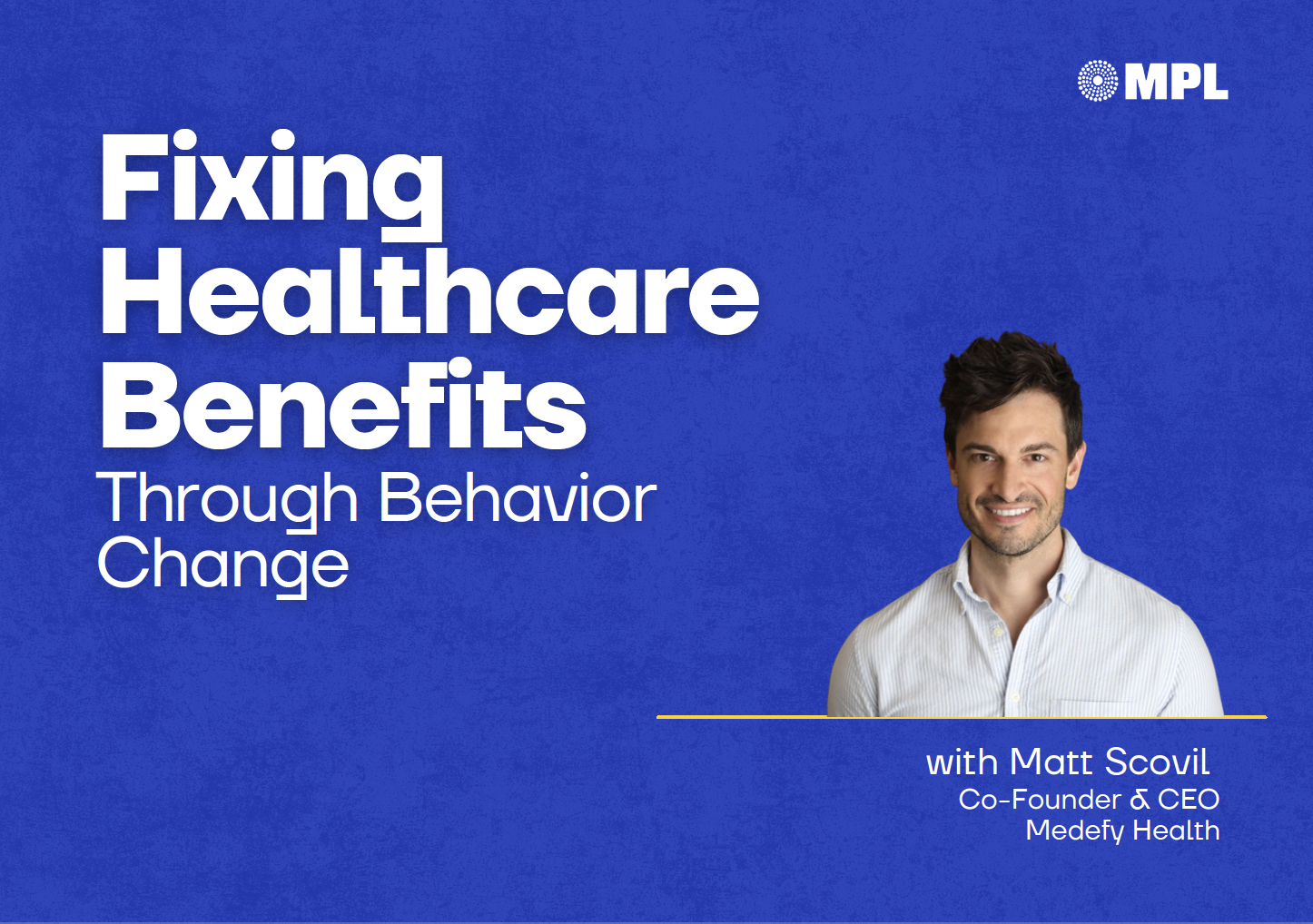
Healthcare benefits are supposed to help people. But for many employees, they’ve become confusing, time-consuming, and difficult to use. In a recent episode of the Modern People Leader podcast, Medefy CEO Matt Scovil shared why that’s happening — and what employers can do to fix it.
Matt’s journey started with a personal experience. With just $300 in his bank account, he needed an eye exam — and had no idea where to go or how much it would cost.
“It took me days to figure it out… If I had an app that told me where to go and how much it cost, I would’ve been done in three minutes.”
That experience wasn’t unique. It’s the reality for millions of employees today.
Over time, employer health plans have grown dramatically in size and complexity.
Each with its own app, login, and process. And most employees only hear about them once a year.
Employers often try to fix rising costs by changing vendors or redesigning plans. But the core issue is simpler:
“It’s not a plan design problem. It’s a behavior problem.”
Even the best plan fails if employees don’t know how to use it.
Healthcare decisions don’t happen in controlled environments. They happen in everyday life:
And in those moments, people need quick, clear guidance. When they get it, outcomes change:
“If we’re with a member in the moment of decision, 94% of the time they take our advice.”
That leads to:
Even today, most employees don’t understand basic health plan terms.
“Over 90% of employees today can’t define the word deductible.”
This isn’t about effort — it’s about complexity. The system has simply outgrown how people naturally make decisions.
Instead of relying on more education or more tools, Matt highlights a better approach:
Provide guidance when decisions are actually being made.
Remove friction and make next steps obvious.
Encourage the right behaviors. One example: A company offered a $99 incentive for preventive care — and saw a dramatic increase in engagement. The lesson is clear: When behavior and incentives align, people act.
Healthcare is often treated as a problem with a single fix. But real progress comes from combining multiple strategies:
“There are no silver bullets. But you can fire a series of silver bullets in sequence that solve the problem.”
That includes:
Together, they create meaningful impact.
In a system that has become increasingly complex, the most effective solutions are often the simplest.
“Simplicity drives behavior change. Behavior change drives cost savings.”
For employers, that’s the opportunity: Make healthcare easier to understand. Make it easier to use. Better outcomes will follow.


