


Six Ways to Lower Rising Health Costs for Companies
Read more


The CHALLENGE
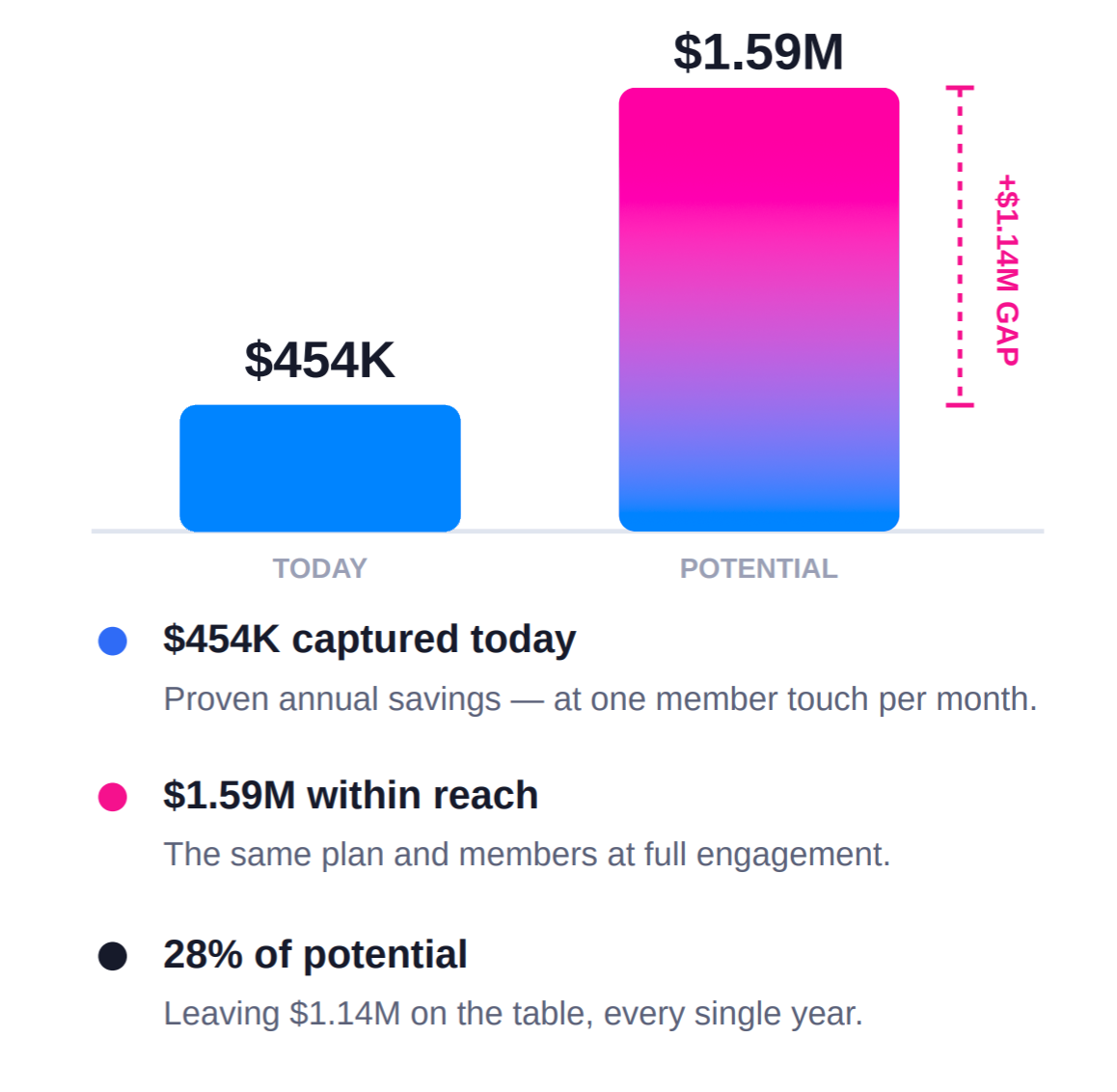
As the employer's navigation partner, Medefy could see the whole picture: what members were doing, what the plan was capable of, and the distance between the two. Nearly half of their eligible employees had registered for the platform, yet daily engagement and total plan savings remained well below its potential. The plan was saving $454K a year — real money. But we saw that the same plan and the same members, fully engaged, could return $1.59M. The employer was capturing just 28% of what was possible.
We showed the employer the gap — and brought a plan to close it.
The cause wasn't the members, and it wasn't the benefits. It was reach: Medefy was only permitted to message members once a month, and most care decisions happened during the silence between touches.
The APPROACH
The fix took a partner the employer trusted enough to act on the data. They agreed to let Medefy double our member outreach cadence and gave us room to rebuild the message itself. Working from their specific plan, we re-engineered every communication around concrete cost savings and the behavioral science of Medefy's proprietary behavioral change model: name the real dollars at stake, make the next step effortless, and land it right before a predictable care decision. Then we ran it as a 10-week sequence timed to the moments that actually drive plan spend.
Structured around four phases, the campaign was built to move members from initial awareness all the way to active advocacy. Each email was timed to reach members before key healthcare decisions: imaging orders, specialist referrals, urgent care visits, and preventive screenings. The goal was to intercept the decision, not just react to it.

The CHALLENGE
As the employer's navigation partner, Medefy could see the whole picture: what members were doing, what the plan was capable of, and the distance between the two. Nearly half of their eligible employees had registered for the platform, yet daily engagement and total plan savings remained well below its potential. The plan was saving $454K a year — real money. But we saw that the same plan and the same members, fully engaged, could return $1.59M. The employer was capturing just 28% of what was possible.
We showed the employer the gap — and brought a plan to close it.
The cause wasn't the members, and it wasn't the benefits. It was reach: Medefy was only permitted to message members once a month, and most care decisions happened during the silence between touches.
The APPROACH
The fix took a partner the employer trusted enough to act on the data. They agreed to let Medefy double our member outreach cadence and gave us room to rebuild the message itself. Working from their specific plan, we re-engineered every communication around concrete cost savings and the behavioral science of Medefy's proprietary behavioral change model: name the real dollars at stake, make the next step effortless, and land it right before a predictable care decision. Then we ran it as a 10-week sequence timed to the moments that actually drive plan spend.
Structured around four phases, the campaign was built to move members from initial awareness all the way to active advocacy. Each email was timed to reach members before key healthcare decisions: imaging orders, specialist referrals, urgent care visits, and preventive screenings. The goal was to intercept the decision, not just react to it.
The results
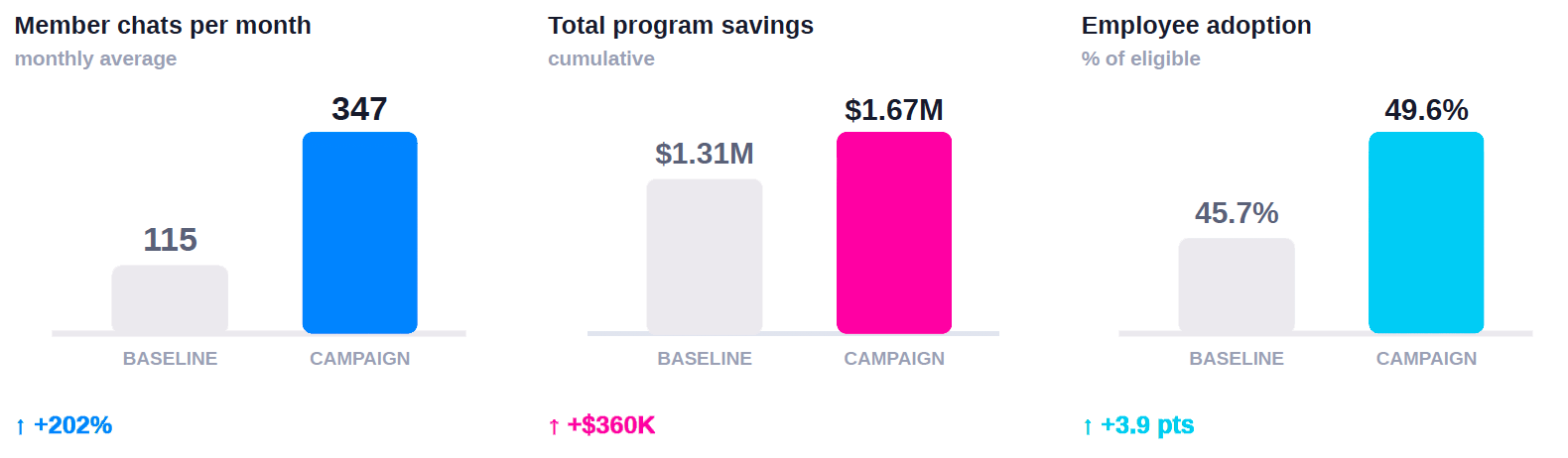
Members weren't disengaged — they acted when communications were relevant, timely, and tied to decisions that directly affected their health and finances. The campaign's final month became the highest-savings month in the plan's two-year history — not from new benefits, but from members finally using the ones that they already had. By analyzing population data, identifying decision windows, and delivering targeted communications, Medefy moved members from passive awareness to active navigation.


